TRAI recommends allowing satellite services that connect directly to devices
TRAI has recommended a new licence for companies that run satellite networks, and says India should allow direct-to-device satellite services, including over the spectrum mobile networks already use. These are recommendations; the government decides.
What happened1/4
Satellite links straight to devices
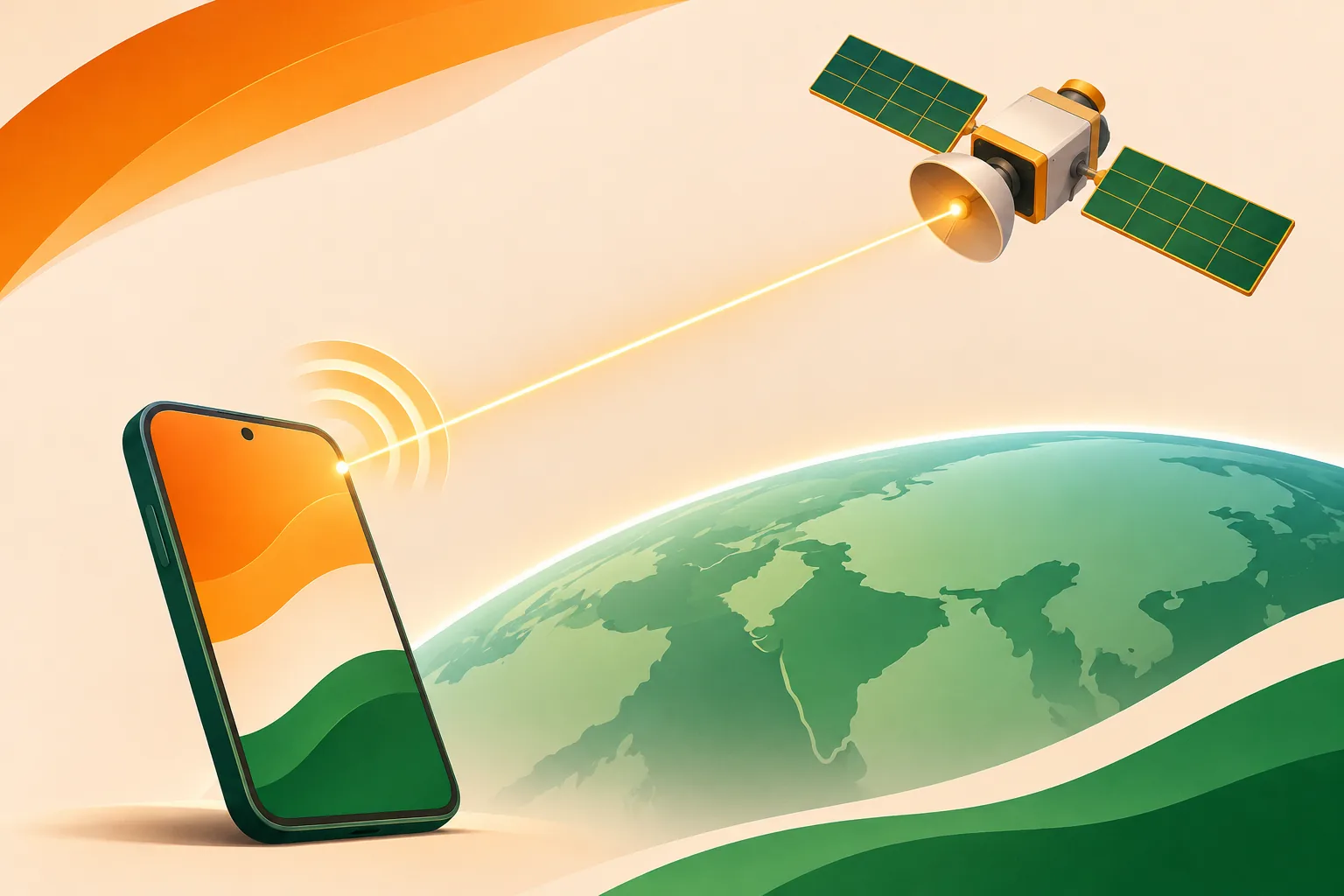
The Telecom Regulatory Authority of India (TRAI) has recommended that direct-to-device (D2D) satellite services be permitted in India, along with a new licence for companies that build and run satellite networks.
Why it matters2/4
More ways to get satellite connectivity
Satellite network operators could rent their networks to licensed telecom providers, including mobile operators. TRAI says this would support the expansion of satellite-based connectivity across the country.
What it means for you3/4
Nothing changes on your phone yet
- These are recommendations to the government, not final rules
- TRAI wants the government to encourage phone makers to support satellite bands in future smartphones sold in India
- Mobile operators could offer satellite service using the spectrum they already hold
Key facts4/4
The proposed licence in brief
- A national licence for up to 20 years, renewable for up to 20 more
- Licence fee of 8% of adjusted gross revenue, with no minimum fee
- Satellite spectrum assigned for up to five years
Key facts
- New licence
- Satellite Communication Network Provider Authorisation
- Licence term
- Up to 20 years, renewable
- Licence fee
- 8% of adjusted gross revenue
- Minimum spectrum charge
- ₹3,500 per MHz a year
- Status
- Recommendation to the government
Timeline
The full story
The Telecom Regulatory Authority of India (TRAI) has recommended a new licensing framework for satellite networks. It also says India should permit direct-to-device (D2D) satellite services, in which satellites connect to user devices directly.
A new kind of satellite licence
TRAI proposes a new licence called the Satellite Communication Network Provider Authorisation. Companies holding it would run satellite networks and offer them as a service, called SCNaaS, to licensed telecom providers. They would not sell telecom services to users themselves. The licence would cover the whole country for up to 20 years, with renewal possible for up to 20 more.
These network providers could ask the government for satellite spectrum, or use spectrum held by the telecom providers they partner with. TRAI says satellite spectrum should be assigned to them for up to five years.
Satellite service straight to devices
TRAI wants two kinds of D2D service allowed. The first uses mobile satellite service (MSS) spectrum in the L and S bands. For this, it asks the government to encourage phone makers to support these bands in future smartphones sold in India.
The second uses IMT spectrum, the bands that mobile networks use. TRAI says this should be allowed on a non-interference, non-protection basis without waiting for the outcome of WRC-27. Mobile operators that hold IMT spectrum could provide it by using a satellite network provider's service.
What it would cost
- Licence fee: 8% of adjusted gross revenue, with no minimum fee
- Minimum spectrum charge: ₹3,500 per MHz a year when the government assigns satellite spectrum
- No extra spectrum charge for mobile operators using their existing IMT spectrum for D2D
What happens next
These are recommendations. The Department of Telecommunications asked TRAI for them, and the government decides whether to accept them. TRAI published a consultation paper in April 2026 and received comments from 31 stakeholders before finalising its recommendations.
Sources
- TRAI releases Recommendations on the Framework for Satellite Communication Network Provider Authorisation and Assignment of Spectrum to Satellite Communication Network Providers — Official document (attached by editor) · Original document
First published 9 Nov 2026, 1:16 am IST · Last updated 9 Nov 2026, 1:16 am IST · Version 2· How we report · Report an error